7 Spooky Clues Your Chimney Cap Isn't Keeping Wildlife Out
Scratching above the fireplace can sound especially unsettling around Halloween. It can also leave you wondering whether an animal has entered, the cap is loose, or the sound is coming from somewhere else. A chimney-top problem deserves a clear explanation rather than a guess based on noise alone. The first decision is whether the opening may be occupied, not which replacement cap to buy.
For Clinton homeowners, chimney cap replacement can help restore protection when a cap is missing, deteriorated, or unsuitable for the opening. It should come after any active wildlife situation has been appropriately addressed. These seven clues explain what you can observe safely and what each clue does and does not establish. Keep the chimney out of use when animal entry or an obstruction is suspected until the relevant professionals have assessed the situation.
Scratching or Movement From Inside the Chimney
Scratching can suggest animal activity, but sound travels through buildings in ways that make its source difficult to locate. The noise may come from a chimney opening, an adjacent chase, or another roofline space. A cap could be damaged, or the animal could be using a different entry route entirely. Noise alone does not establish the species or prove that replacing the cap will resolve it.
Note when the sound occurs and whether it appears linked to repeated activity outside. Do not reach into the flue, open an unfamiliar cleanout, or climb onto the roof to investigate. Connecticut DEEP's squirrel guidance emphasizes avoiding closure of openings while animals remain inside. Identification and occupancy need attention before exclusion work begins.
Useful observations to share
- Whether the sound repeats at similar times.
- Whether an animal repeatedly enters one visible opening.
- Whether the noise began after a storm or visible cap movement.
- Whether you have also noticed debris or changes around the fireplace.
A short recording from a safe indoor position may help explain the concern without disturbing the animal. The person evaluating wildlife can determine whether further identification or handling is needed. Our chimney-top protection services focus on the cap and exterior components after the appropriate prerequisites are resolved. A new cap should prevent future entry, not trap an animal inside.
Chirping or Fluttering Near the Flue
Bird sounds can indicate nesting or roosting, but they should not be treated as permission to remove a nest. Chimney swifts use certain masonry chimneys, and their presence is not simply a cap failure to correct immediately. Species identification and legal protections matter. An apparently quiet opening during one observation does not establish that the chimney is unoccupied.
Connecticut DEEP explains that chimney swifts and their active nests are protected. Ask an appropriately qualified wildlife professional or the agency for guidance before work affects a potentially occupied site. Do not install a cap over active birds, disturb nesting material, or light a fire to force them out. A Halloween date or a drop in temperature is not evidence that occupancy has ended.
Twigs or Nesting Material Appearing in the Fireplace
Twigs in the fireplace can be a clue to nesting activity, but not every piece of debris came from an animal. Windblown material can also enter an inadequately protected opening. The appearance of a few fragments does not tell you whether the remaining material is old, occupied, or blocking the flue. That distinction needs to be resolved before cleaning or capping proceeds.
Keep children and pets away from unfamiliar debris and avoid pulling material down from above. Do not test the chimney with a small fire to see whether it draws. An appropriate chimney professional should assess suspected obstruction, while wildlife concerns need the relevant expertise first. Cap work and checking whether the venting system is ready for use are related but separate tasks.
| Observation | What it may indicate | What it does not prove |
|---|---|---|
| Twigs appearing below the flue | Debris entry or nesting material | That the nest is abandoned |
| Repeated bird sounds | Possible occupancy | The species or legal work window |
| Scratching without visible animals | Activity somewhere near the chimney | That the cap is the only entry route |
| Debris after a storm | Weather-related entry may be involved | That the flue is clear for use |
U.S. Fish and Wildlife Service guidance on bird nests explains why active nest disturbance can require authorization. State protections may also apply, so an apparently empty nest is not an automatic do-it-yourself cleanup job. The responsible professional should establish how the situation can be handled lawfully. Once that is resolved, the exterior protection can be evaluated without guessing about what remains inside.
A Missing, Crooked, or Storm-Damaged Cap
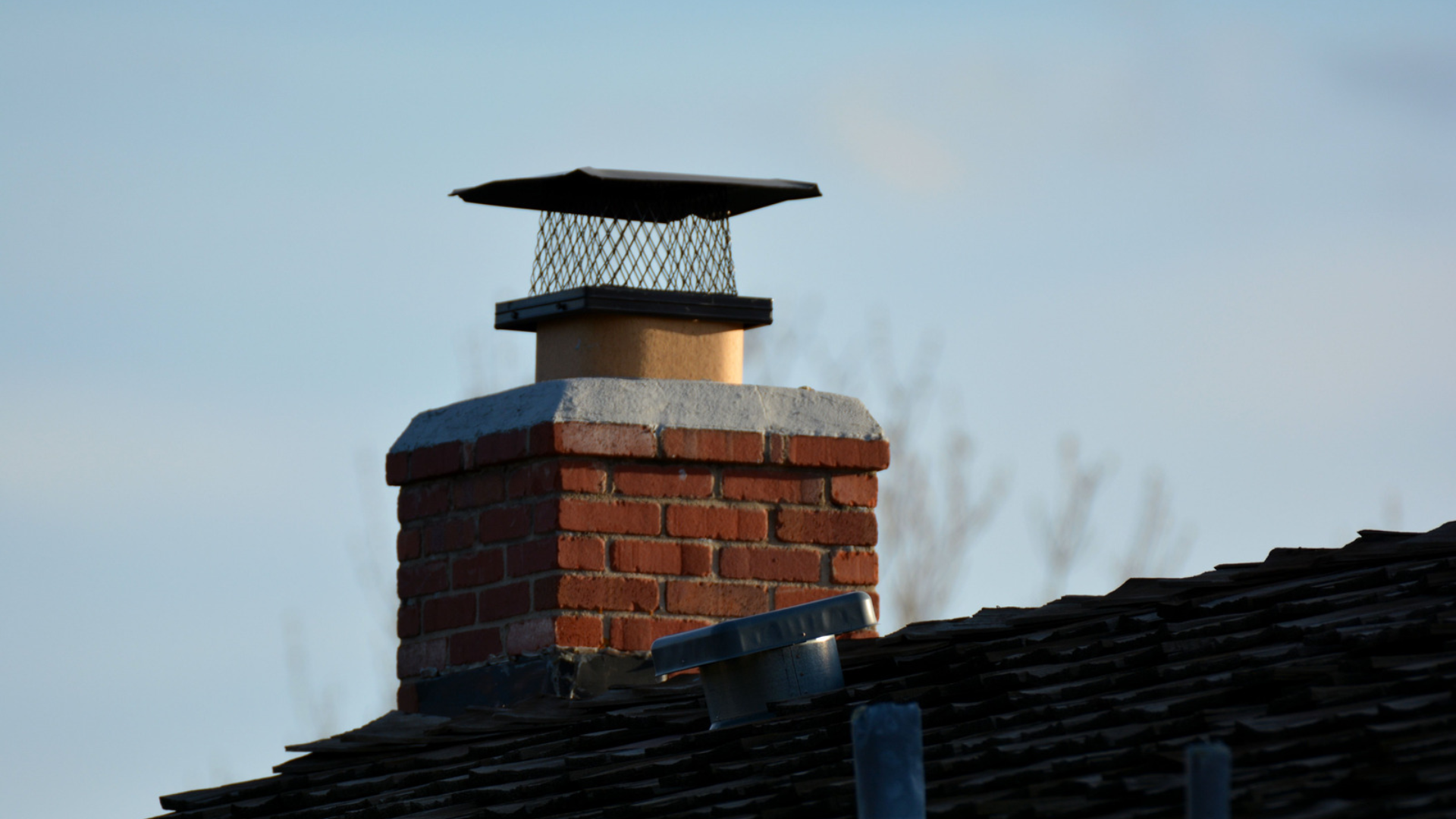
A visibly displaced cap is one of the more direct reasons to arrange an exterior evaluation. The opening may no longer be protected as intended even if part of the cap remains attached. A crooked appearance can involve loose hardware, a bent body, an unsuitable fit, or movement at the supporting component. Looking from the ground cannot establish which condition is responsible.
Photograph the chimney from a safe location and keep people away from an area beneath loose metal. Do not climb up to straighten the cap or retrieve a piece resting on the roof. A cap that can be correctly secured may not need full replacement if its body and attachment remain serviceable. A missing, badly deformed, corroded, or incompatible cap usually calls for a different scope.
What the exterior evaluation should establish
- Whether the cap body and screening remain sound.
- Whether the mounting surface can hold the intended attachment.
- Whether the size and configuration fit the existing chimney system.
- Whether an animal-entry concern must be addressed before closure.
- Whether nearby components were also affected by the storm.
A cap moving after storms in Madison or Westbrook should not simply receive the same fastening repair repeatedly without explanation. The cause may be the mounting method or an unsuitable component rather than one loose screw. A durable correction needs to address that cause. The repair should restore fit and attachment, not only the cap's appearance from the yard.
Broken or Detached Cap Screening
Screening can lose its protective function when it tears, separates, corrodes, or leaves gaps around the assembly. A cap may still shed some rain while allowing access through a damaged side. Conversely, an intact-looking screen may belong to a cap that does not fit the opening properly. Protection depends on the whole installation rather than one visible panel.
Do not add household mesh, wire, or a makeshift cover over the termination. The system still needs to vent according to its design and applicable requirements. An appropriate replacement screen or cap must suit what the flue serves, including any manufacturer-specific termination requirements.
Smaller openings are not automatically a better repair if the alteration interferes with venting.
| Cap condition | Possible response | What needs verification |
|---|---|---|
| Sound body with limited screen damage | Compatible repair may be possible | Product suitability and attachment |
| Widespread corrosion or deformation | Replacement may be appropriate | Full condition and correct fit |
| Repeated failure at the mounting point | Correct the underlying attachment problem | Supporting material and mounting design |
| Factory-built termination with damage | Use the appropriate system-specific component | Manufacturer requirements |
For an Old Saybrook or Guilford home, material choice should account for exposure and the existing system. Stainless steel can be a useful corrosion-resistant option without eliminating every maintenance need. Gauge, fabrication, screening, and attachment also matter. The proposal should explain the recommended component rather than rely on a material name alone.
Repeated Visits Around the Chimney Top
A bird landing briefly or a squirrel crossing the roof is not proof of entry. Repeated movement into the same opening is more useful evidence. Even then, the entry could be beside the chimney rather than through the flue cap. The distinction affects whether cap repair, another exterior repair, or wildlife handling is needed.
Observe from the ground without placing food, making noise, or approaching the animal to test its response. Note the opening used and the pattern you can see. Share that information with the appropriate professional before any exclusion work is scheduled. Sealing the most visible gap without checking the actual route can leave the problem unresolved or trap wildlife elsewhere in the structure.
Unusual Odors or Material Falling From the Opening
An unusual odor can have several causes and does not identify an animal or a failed cap by itself. Moisture, deposits, debris, or other conditions in the system may contribute. Material falling into the fireplace can likewise involve weathered components or existing deposits rather than a nest. The next step is to identify the material and source without using the appliance as a test.
Avoid handling unfamiliar debris or attempting to mask the odor with fragrance or a fire. Report whether the change follows rain, animal sounds, or visible cap damage. A chimney-top evaluation may identify an exterior problem, while cleaning, venting-system assessment, or wildlife work may belong with other qualified providers. If smoke, a carbon-monoxide alarm, or a suspected fuel-gas problem occurs, leave the affected area and seek appropriate emergency help.
Choosing Wildlife Help, Cap Repair, or Replacement
Separate the immediate occupancy question from the condition of the exterior hardware. An occupied chimney needs an appropriate wildlife response before the opening is closed. A damaged cap on an unoccupied system needs a repair decision based on its actual materials and fit. Neither question should be answered solely from the sound heard in the room below.
Follow this sequence
- Suspected active wildlife: Keep the chimney out of use and arrange qualified identification or guidance.
- Protected nesting activity: Follow the appropriate wildlife requirements before exclusion.
- Sound cap with a limited defect: Consider a compatible screen or attachment repair.
- Missing, corroded, deformed, or unsuitable cap: Plan an appropriate replacement for the existing system.
- Possible obstruction or venting problem: Arrange the necessary chimney-system assessment before use.
Our chimney cap and exterior chimney guides cover the distinction between components and protection needs. A flue cap protects an opening, while a chase cover protects the top of a framed enclosure. A masonry crown is a different component again. Identifying what your home has prevents an estimate for one part from being mistaken for a complete solution to another problem.
Understand the pricing scope
For independent budgeting, HomeGuide's chimney-cap cost guide lists
$200 to $850 for cap replacement with installation and
$50 to $500 for the unit alone nationally. The unit-only figure is not an installed project total, and the two figures should not be added together. We prepare the cap-work proposal around the existing system, access, fit, and required component. Wildlife handling, obstruction removal, or other chimney work needs its own clearly defined scope where applicable.
| Cost category | National planning context | What to clarify |
|---|---|---|
| Cap replacement with installation | $200 to $850 | Component, attachment, and access |
| Cap unit alone | $50 to $500 | Labor and other project costs are separate |
| Compatible cap repair | Project-specific proposal | Condition and approved repair method |
| Wildlife or venting-system work | Separate professional scope | Provider, timing, and return-to-use requirements |
Ask what the quote includes and whether anything needs to happen before the cap is installed. A replacement cap is not proof that every part of the chimney has been inspected or cleaned. The appropriate professional should explain when the connected system can return to use. Prevention work is complete only when its prerequisites and limits are understood.
Photographs of the exterior findings can help you compare the recommendation with the observed condition. Ask why repair is suitable or why replacement is necessary. Avoid choosing solely by the lowest cap price without checking system compatibility. The objective is appropriate protection on an existing chimney, rather than a generic cover adapted to fit at any cost.
Restore Protection at the Top of Your Chimney
Unexplained chimney sounds deserve a practical response rather than a Halloween guessing game. We help Clinton homeowners evaluate cap condition, fit, and exterior protection on existing chimney systems. We also serve Madison, Guilford, Westbrook, and Old Saybrook. Active wildlife concerns need the appropriate professional response before cap work closes the opening.
Contact Chimney Cap Pro of Connecticut to discuss the signs you have noticed. Tell us about sounds, repeated animal entry, debris, or visible cap damage. We can explain the exterior work to consider and what needs to happen first. The goal is appropriate long-term protection without trapping wildlife or overlooking a separate chimney problem.
Chimney Services and Further Reading
Recent Posts