5 Frightening Signs Your Chimney Chase Cover Is Letting Rain In
A brown streak on chimney siding or a damp patch beside the fireplace can be easy to dismiss after one storm. When it returns, the important question is where the water is entering. A metal chase cover can fail while the flue cap above it remains in place. Similar interior symptoms can also come from flashing, siding details, or another nearby component.
For Madison homeowners, chimney chase cover replacement should follow a diagnosis of the existing framed chimney enclosure. This article concerns metal covers on framed chases, not the concrete crowns found on many masonry chimneys. The Halloween framing makes the warning signs memorable, but the repair decision depends on observable condition and water entry. These five clues explain what deserves attention and why the correct component matters.
Rust Streaks Running Down the Chase Siding
Orange or brown streaks can indicate corrosion from metal above the stained area. The source may be the cover, a fastener, a collar, or another component that drains onto the siding. The stain alone does not establish how deeply the metal has deteriorated. Cleaning the streak can improve appearance without addressing the source.
Observe the pattern from the ground and record whether it returns after rain. Do not climb up to scrape the cover or test rusty areas by pushing on them. A professional needs to distinguish surface discoloration from pitting, perforation, and failed seams. A rust streak is a reason to investigate, not proof that every part of the chase needs replacement.
Useful details to document
- Whether the stain begins below the cover edge or a separate metal detail.
- Whether the pattern has expanded since earlier photographs.
- Whether dampness also appears inside after storms.
- Whether previous coatings or patchwork have been applied.
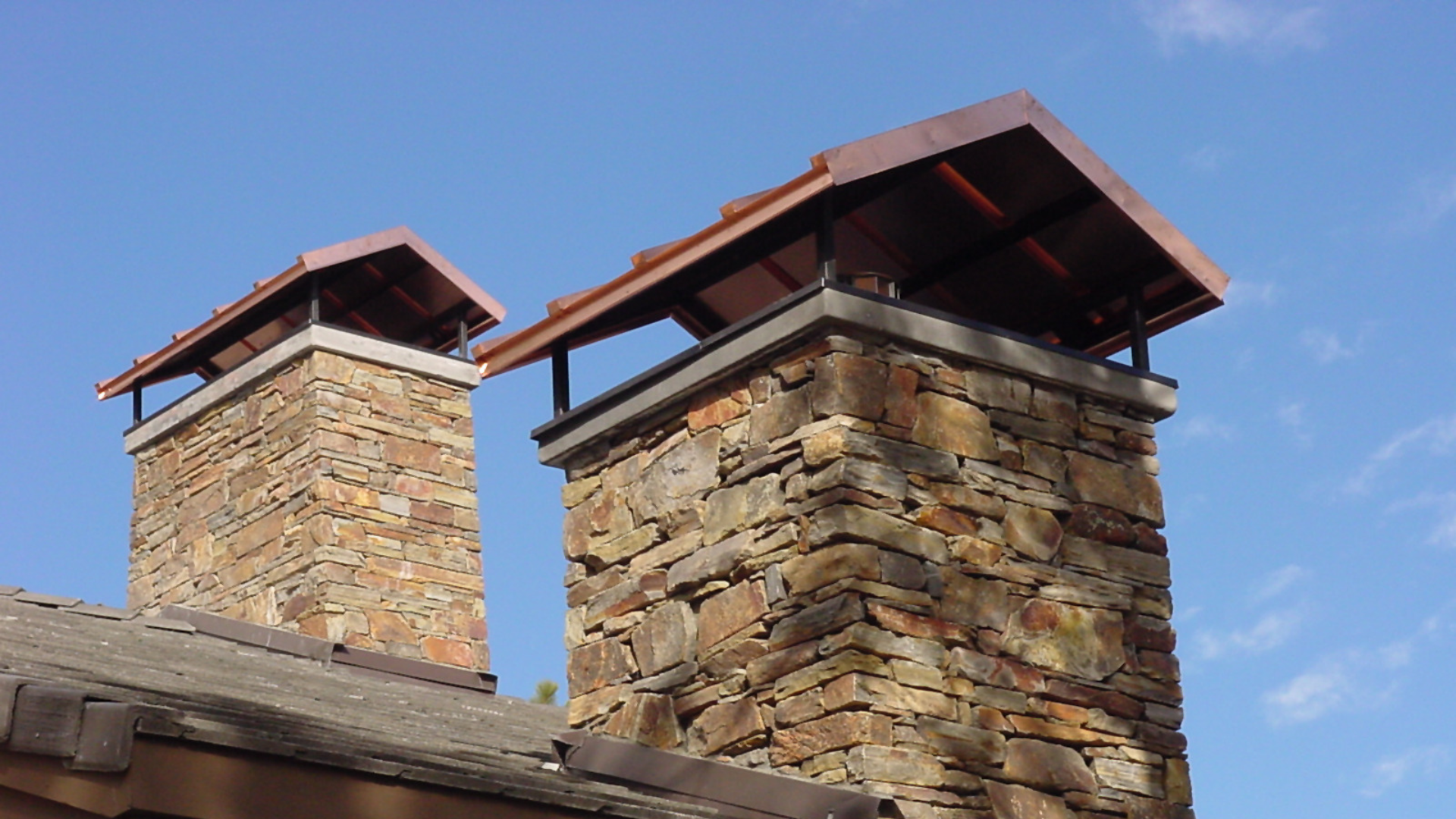
A framed chase can be finished with siding or veneer that makes its construction hard to recognize from the yard. Confirm the type before ordering any component. Our exterior chimney services address the cover and other chimney-top details on existing systems. The work should match the enclosure you have rather than assume every chimney top is masonry.
Standing Water or a Sagging Cover
A chase cover needs to shed water according to the design of the installed chimney system. A depression can retain water and prolong wetting at seams or penetrations. Visible sagging may involve the cover itself or conditions beneath it. Its appearance does not tell you whether replacement metal alone will correct the full problem.
Chim Cap Corporation describes cross breaks, a raised collar, and a drip edge among its chase-cover features. Those details illustrate why shape and drainage matter alongside material choice. They are not a universal set of dimensions for every chimney. A replacement must suit the particular system and the actual chase configuration.
| What you notice | What needs evaluation | Why it matters |
|---|---|---|
| A visible depression | Cover shape and underlying support | Water can collect instead of leaving the surface |
| Repeated water staining | Runoff route and metal condition | Staining may identify persistent wetting |
| A loose or lifted edge | Attachment and surrounding construction | Movement can affect weather protection |
| Old patches in a low area | Original defect and remaining metal | More sealant may not restore drainage |
For a Clinton or Branford property, wind exposure and access also affect how the condition is evaluated. Roof-level photographs can help show a low area that cannot be seen clearly from the ground. Ask whether the supporting chase top remains sound and whether the new cover will address the drainage defect. Replacing a flat piece with another poorly draining piece leaves the basic problem in place.
Water Spots or Dampness Around the Fireplace After Rain
A stain beside the fireplace can be consistent with chase-cover water entry, but it does not identify the cover as the source. Water can travel down concealed surfaces before it reaches the visible finish. A flue cap, roof transition, siding detail, or another opening may produce a similar result. The repair should follow the verified route instead of the nearest component to the stain.
Record whether the dampness follows every rain or only prolonged or wind-driven storms. Note the approximate delay between rainfall and the first visible change. Keep people away from wet electrical equipment and areas with sagging finishes. Do not open the chase or climb into an unsafe space to follow the moisture yourself.
Our chimney cap and exterior leak guides organize these issues around the component involved. A cap covers the flue termination, while a chase cover protects the larger enclosure around the pipe. Flashing addresses the roof-to-chimney transition, and a masonry crown belongs to a different top construction. Knowing those terms helps you ask for a clear explanation without diagnosing the leak yourself.
Ask the evaluator to connect the evidence
- What exterior defect corresponds with the interior symptom?
- Is the chase cover itself leaking, or is water entering elsewhere?
- Does the chase contain visible moisture damage requiring another scope?
- Which repair addresses the source rather than only the stain?
- What indoor drying or restoration work may remain afterward?
A Madison home with a framed chase can have more than one water-entry defect. Correcting the top cover may be necessary while flashing also needs attention. That possibility does not justify replacing everything automatically. Each recommended task should have an explanation tied to its observed condition.
Corrosion or Gaps Around Collars and Fasteners
The pipe opening through a chase cover is a critical transition, and the surrounding parts must suit the installed system. Corrosion, a failed connection, or damaged sealant may deserve repair. An apparent gap is not automatically a defect, however, because certain systems require ventilation or clearance spaces. Generic advice to seal every opening can therefore create a different problem.
A Hearth & Home Technologies installation manual distinguishes the chase top, collar, storm collar, and termination, with system-specific requirements for their connections. This is why the actual chimney and appliance instructions must guide the work. Do not pack openings with foam or smear sealant around every visible space.
Water protection must preserve the clearances and airflow the system requires.
| Component | Primary role | Common misunderstanding |
|---|---|---|
| Flue or termination cap | Protects the outlet while allowing venting | Replacing it always fixes chase-cover leaks |
| Metal chase cover | Protects the top of the framed enclosure | It is the same as a masonry crown |
| Collar and storm-collar details | Manage the transition around the pipe as designed | Every visible space should be sealed |
| Roof flashing | Manages the roof-to-chimney junction | A sound cap rules out a flashing leak |
The professional evaluating the chase should identify the existing chimney system where possible. Compatible replacement details matter as much as measurements of the outer box. Fastener selection, material compatibility, and the condition of the attachment location also affect the finished work. A tube of sealant cannot compensate for the wrong cover or a deteriorated mounting surface.
Musty Odors or Moisture That Returns After Storms
A recurring musty odor can suggest a moisture concern without identifying the source or proving mold is present. Damp materials within the enclosure or nearby building assemblies may contribute. A chase-cover leak is one possible cause, while condensation or another exterior entry route may need consideration. Smell alone cannot establish the correct replacement part.
Keep a record of when the odor appears and whether visible staining changes at the same time. Do not mask it with fragrance or assume a dry surface means concealed materials have dried. The exterior source and any affected indoor material need separate evaluation. A repaired cover can stop one entry route without completing every part of water-damage recovery.
Confirming Which Chimney Component Is Failing
The first step is to identify whether the home has a framed chase, a masonry chimney, or another arrangement. A chase cover, crown, and flue cap perform different jobs. Using the names interchangeably can lead to a proposal that solves the wrong problem. The visible symptom should guide the investigation without predetermining the repair.
The Chimney Safety Institute of America's homeowner resources offer information about professional chimney evaluation and safety. For a leak evaluation, distinguishing the cap from the chase cover makes photographs and replacement discussions easier to follow. Ask the contractor to point out the failed part and explain its role. You should be able to understand why that part, rather than a different exterior detail, needs work.
A useful diagnostic sequence
- Establish the construction and installed chimney system.
- Compare interior moisture timing with storm conditions.
- Inspect cover shape, corrosion, seams, and attachment.
- Check the compatible pipe-transition and termination details.
- Evaluate nearby roof flashing and exterior wall details.
- Document the source and define any separate restoration work.
Do not use a garden hose from the roof as a do-it-yourself leak test. Uncontrolled testing can introduce water in ways that do not match the storm and create misleading results. Safe professional access and an appropriate investigation are more useful than soaking every possible entry point. Photos and a clear history help even when the visit occurs on a dry day.
For Guilford or Old Lyme homeowners, the same framework applies. Exposure, roof geometry, prior repairs, and construction details matter. A framed chase on a sheltered elevation can still have a failed seam. An exposed chase may remain serviceable when its materials and details are appropriate.
Deciding Between Repair and Chase Cover Replacement
A serviceable cover with a limited compatible connection problem may not need complete replacement. Widespread corrosion, perforation, deformation, or an unsuitable fit can make replacement more appropriate. Repeated patching also deserves a fresh look at the cause. The decision should follow the remaining material and the installed system, rather than a universal age cutoff.
Match the recommendation to the finding
- Localized connection defect: Evaluate whether an approved repair can restore performance.
- Perforated or badly corroded metal: Consider replacement instead of coating over missing material.
- Poor drainage or deformation: Address the cover design and any support issue.
- Wrong fit or incompatible details: Specify a suitable replacement for the existing system.
- Leak elsewhere: Repair the actual cap, flashing, wall detail, or other source.
A stainless steel chimney chase cover can offer corrosion resistance, but the material name alone is not a complete specification. The grade, thickness, fabrication, seams, support, and attachment all matter. Stainless steel is not a promise that inspection or maintenance will never be needed. Ask which attributes are appropriate for your site and why.
Replacement planning should include the number and positions of pipe openings and the condition of the surrounding enclosure. It should also preserve required clearances and airflow. Custom fabrication may require measuring first and installing after the component is made. Avoid assuming every leaking chimney chase cover can be replaced with a stock piece during the first visit.
When other deterioration is discovered, keep the scope understandable. A cover replacement, chase-framing repair, siding repair, and roof-side flashing repair are different tasks. Some may need coordination with another qualified provider. A complete plan identifies those boundaries before the project is treated as finished.
Understanding Chase Cover Replacement Costs
For independent budgeting, HomeGuide's chimney-cap and chase-cover guide lists
$300 to $700 with installation for chase-cover replacement nationally. That broad figure does not establish the cost of a custom stainless assembly, difficult access, or concealed chase repairs. We prepare the proposal around the existing enclosure and the component it requires. The replacement should be specified before the price is compared with another project.
| Cost consideration | Planning guidance | What to ask |
|---|---|---|
| Chase cover replacement | National context: $300 to $700 installed | Which material and configuration does the scope include? |
| Custom dimensions or multiple openings | Project-specific proposal | Are fabrication and installation both included? |
| Damaged support or chase materials | Separate identified scope | What needs repair beneath the cover? |
| Indoor drying or finish restoration | Separate scope where needed | Who addresses the affected interior materials? |
Compare the same outcome
- Confirm the component being replaced and its material.
- Clarify removal and disposal of the existing cover.
- Identify compatible collar, termination, and attachment details.
- Discuss safe access and fabrication timing.
- Confirm how additional concealed damage will be handled.
A low price for a metal part is not equivalent to a complete installed replacement. Conversely, an expensive cover will not solve a leak that originates at the roof flashing. Ask the proposal to connect each item with the diagnosis. That makes the recommendation easier to assess without relying on a generic cost-per-chimney assumption.
Document the interior condition before repairs and discuss the appropriate follow-up. Stains may remain after the exterior source is corrected. Drying and restoration should be verified through suitable methods rather than judged only by appearance. Separate the source repair from remaining indoor tasks.
Find the Source Before Replacing the Cover
Water around the fireplace deserves a repair plan tied to the component that is failing. We help Madison homeowners evaluate chimney-top protection on existing systems. We also serve Clinton, Branford, Guilford, and Old Lyme. A chase-cover recommendation should account for the enclosure, the installed chimney, and any separate water-entry defects.
Contact Chimney Cap Pro of Connecticut to discuss rust, recurring dampness, or a visibly damaged cover. Share any safe ground-level photographs and the conditions that bring the symptoms back. We can explain the appropriate exterior work and the scope to consider. Address the source so the Halloween warning sign becomes a clear maintenance decision.
Chimney Services and Further Reading
Recent Posts